English Circus Vocabulary for Kids
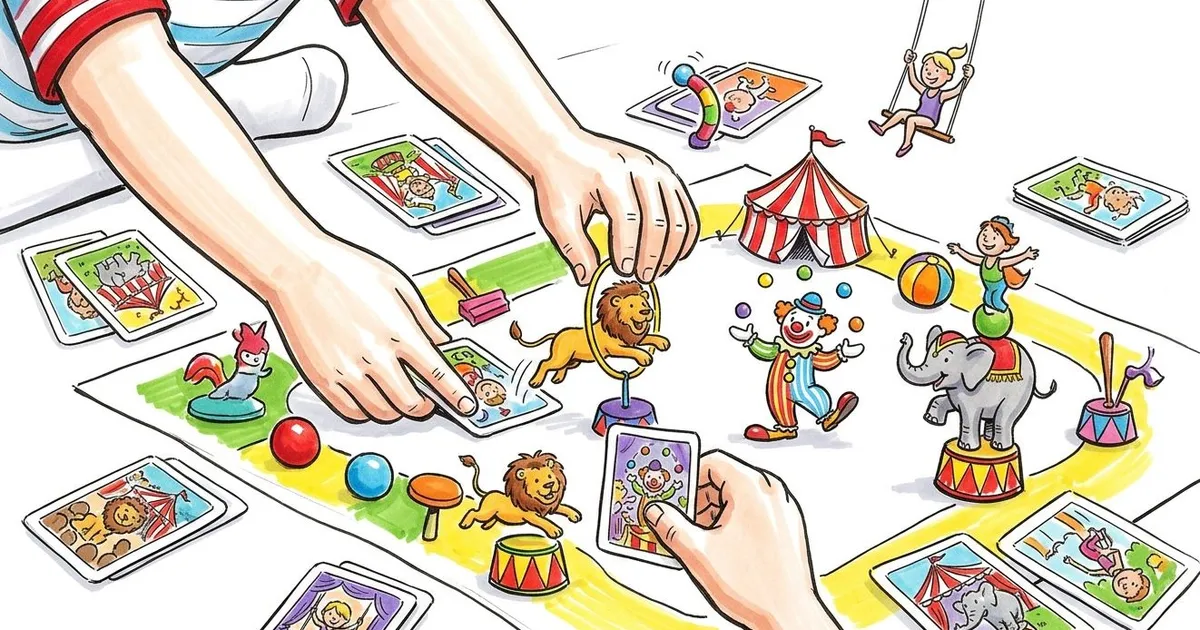
Twenty-four core words help children describe a circus, its performers, and its actions. Circus Words in English for Kids: Vocabulary and Activities should begin with visible nouns such as clown and tent, followed by verbs such as juggle, balance, and bow. Introduce words through a picture, video, toy scene, or live show, then place each word in a short phrase. This sequence suits beginners and multilingual children who connect ideas across languages.
📥 Circus Words in Action
Independent vocabulary practice for young English learners
Leave your email — we'll send the PDF to your inbox.No spam — the PDF plus one short reminder. Unsubscribe anytime.
Essential Circus Vocabulary and Useful Phrases
Teach concrete words before abstract ideas. A child can point to a tent, copy an acrobat, or hold a pretend ticket. Demonstrate action words physically: say “spin,” turn around, and invite your child to copy you.
Treat Circus Words in English for Kids: Vocabulary and Activities as a menu, not a test. Choose six to eight words first. Add new vocabulary when your child recognises earlier words in unfamiliar pictures and uses them without copying an adult.
Putting the Words into Context
Circus Words in English for Kids: Vocabulary and Activities becomes stronger when words form short patterns. Begin with noun phrases: “a funny clown,” “a bright spotlight,” and “a tall tent.” Then add actions: “The clown spins,” “The acrobat balances,” and “The audience claps.”
Describe one picture at a time. Ask, “Who can you see?” “What is the performer doing?” and “What colour is the costume?” Accept one word, then model a full sentence. If your child says “juggler,” answer, “Yes, the juggler is catching the balls.”
Older children can connect events: “First, the ringmaster introduces the act. Next, the acrobat climbs the rope. Finally, the audience claps.” They can explain opinions: “The tightrope act looks difficult because the performer must keep steady.” This develops speech beyond naming objects without a grammar lecture.
Activities for Different Ages
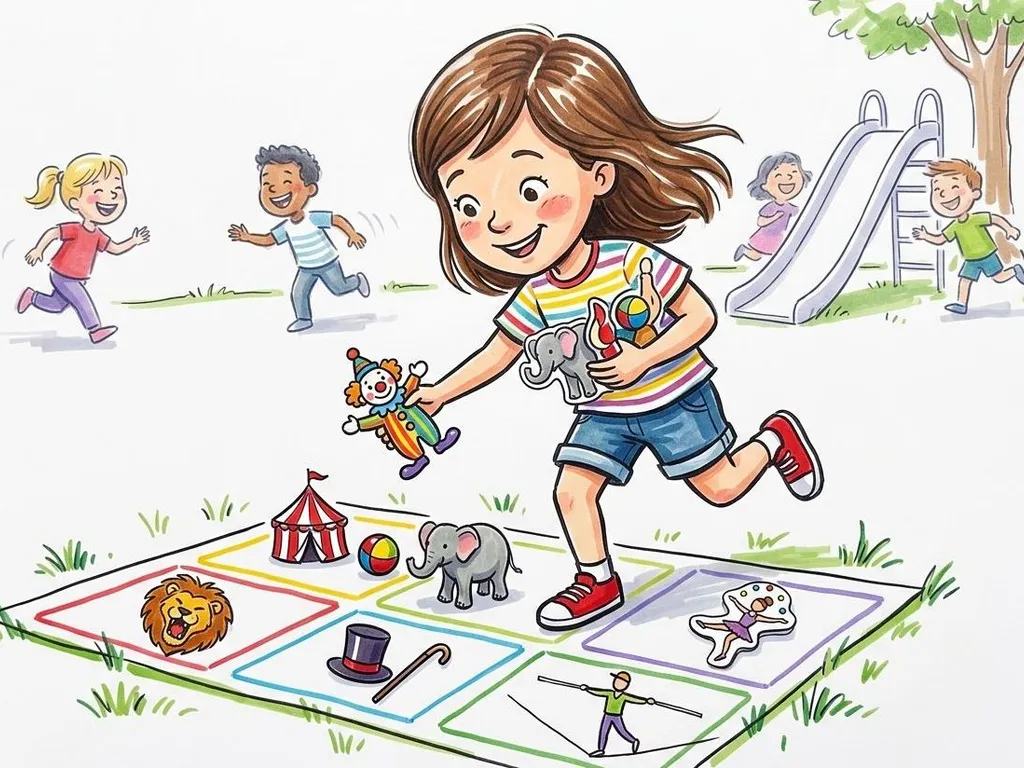
One circus scene can support every level by changing the task. Younger learners need movement, repetition, and visible objects. Older learners need choices, descriptions, and reasons that prompt vocabulary recall instead of scripted repetition.
In mixed-age families, assign different roles. A younger child finds the correct card; an older child gives a clue without naming it. Multilingual children may name an object in another language before supplying the English word or sentence. Their existing languages support English learning.
Simple Practice at Home
Keep practice brief and active. Place word cards face down. A child turns over a card, names it, and performs or describes it. For juggler, mime throwing scarves. For spotlight, point a torch at a toy performer. Choose soft objects and keep climbing or balancing at floor level.
Build a Circus Sentence
Choose a performer, action, and detail. Combine them: “The clown spins under the spotlight.” Replace one part: “The acrobat spins under the spotlight.” For a harder round, add a reason, sequence word, or opinion.
A toy show gives Circus Words in English for Kids: Vocabulary and Activities a purpose. Your child can arrange a ring, make tickets, introduce each act, and voice the performers. LearnLink tutors use pictures, movement, guided questions, and repeated sentence patterns to develop independent speech.
Common Mistakes and How to Correct Them
Children may confuse fun and funny. A circus can be fun, meaning enjoyable. A clown may be funny, meaning it makes people laugh. Contrast two sentences instead of giving a long definition. If children call every performer a clown, sort pictures into clown, acrobat, juggler, and magician.
Avoid interrupting every sentence to correct pronunciation or grammar. Repeat the child’s idea in accurate form and continue. If an error returns, practise one pattern with new circus words: “The magician is performing. The acrobat is balancing. The juggler is catching.”
- Practice five circus words with children aged six to eight using picture cards.
- Correct one pronunciation mistake gently, then ask your child to repeat twice.
- Use a circus storybook to check meanings before introducing three new nouns.
- Sort eight vocabulary cards into people, animals, objects, and actions.
- Review Circus Words in English for Kids: Vocabulary and Activities with a two-minute game.
When a word has several meanings or pronunciations, Cambridge Dictionary is a useful check before turning it into child-friendly examples.
Frequently Asked Questions
How Many Circus Words Should a Child Learn at Once?
For school-age children, begin with four to six words per short session. Children often manage six to eight when pictures and actions reinforce meaning. Older learners may handle more, but recall matters most. Revisit vocabulary on later days and mix old items with new ones.
Should Circus Vocabulary Include Animals?
Include animals when they appear in stories, historical pictures, or pretend scenes, but explain the context. Families and cultures may view animal performances differently. Phrases such as “a lion costume,” “a toy elephant,” or “an animal in a circus story” avoid presenting live animal acts as essential.
How Can a Multilingual Family Practise These Words?
Connect each English word with languages spoken at home. Compare labels, then return to an English phrase. A child might name tent in two languages before saying, “The circus tent is large.” Circus Words in English for Kids: Vocabulary and Activities should add English to the child’s language resources, not replace them.
When Should a Child Move from Words to Full Sentences?
Start when the child understands four words. Beginners can combine a noun and action: “Clown jumps.” Model “The clown jumps” without treating the shorter attempt as failure. Progress to descriptions, questions, and sequences as confidence grows. Recognition without the original teaching card signals readiness.
Want to see how these ideas work in a real lesson — try a LearnLink trial lesson.
Stay updated on our latest tips and resources by following us on Instagram LearnLink.